Understanding Your 3-Month-Old’s Developmental Milestones
Cognitive Growth and Cause-and-Effect Awareness
At three months, your little one’s brain forms over a million new neural connections every second. That’s a frenzy. Cognitive growth during this phase hinges on noticing patterns and predicting outcomes. Cause-and-effect awareness emerges when a baby swipes at a dangling ring and watches it sway. Suddenly, action leads to reaction!
The best baby toys for 3 months trigger these discoveries. A soft rattle rewards a clumsy grab with a chime. A play gym converts a kick into a jingle. Every interaction builds understanding.
- Auditory feedback from a squeeze or shake
- Visual movement after a gentle touch
- Textured surfaces that respond to pressure
These toys also boost focus. Your baby learns that their own movements have power. That’s the first step toward intentional play, not random flailing. Choose baby toys for 3 months that react in clear, simple ways.
Visual Development and Focus Skills
An infant’s vision improves dramatically between birth and three months. This month marks a shift from blurry shapes to sharper, more defined faces and objects. Your baby will begin tracking movement with their eyes, following a toy as it arcs across their line of sight. This skill, known as visual pursuit, forms the basis of early focus and attention spans.
Depth perception remains limited. Babies at this age rely on high contrast patterns and bold colours to distinguish edges. This stage deserves intentional scenery; the right stimulation encourages babies to lock their gaze on a specific object and study it. See a list of visual milestones to look for:
– Smiling at familiar faces
– Watching objects move from side to side
– Focusing on a toy held close to their face
Parents often choose baby toys for 3 months that offer simple, high contrast imagery. Black, white and red palettes capture attention effectively. These toys encourage focus by presenting a clear visual target. A baby who can fix their gaze on a single object for several seconds is practicing concentration, a quiet skill that will serve them well later.
Auditory Recognition and Response
A baby’s auditory world at three months is richer than many parents assume. Their brains already map the cadence of familiar voices, distinguishing their mother’s speech from a stranger’s within seconds. This auditory recognition is a survival instinct, honed through repetition.
You may notice your little one calming to a lullaby or startling at an unexpected noise. These reactions signal a developing auditory response system. Babies at this stage begin to localise sound, turning their heads toward a familiar voice. It is remarkable to witness!
Baby toys for 3 months that incorporate gentle rattles or soft chimes support this leap. The right toy provides a sound source for your baby to locate. Baby toys for 3 months need not be elaborate; a simple bell encourages focused listening.
Indicators of healthy auditory development include:
- Turning toward familiar voices
- Cooing in response to speech
- Showing preference for certain melodies
Each sound interaction strengthens neural pathways, building early language skills.
Emerging Motor Skills and Reflexes
At three months, your baby’s body is catching up to their busy brain. The Moro reflex, that startle response from birth, begins to fade as voluntary movement takes over. Notice how your little one holds their head steady during tummy time, pushing up on forearms with growing confidence!
Hands reveal the real progress. That tight newborn grasp loosens into something exploratory. Your baby will bat at objects, swatting without precision but with clear intent. Legs kick with purpose, pressing against surfaces to test resistance. These movements build core strength and spatial awareness.
Reflexes still guide some responses:
- The rooting reflex drives feeding behaviour
- The palmar grasp lets them hold your finger, though release remains tricky
- The stepping reflex may appear when held upright
Baby toys for 3 months that hang within reach invite these swipes and kicks. A play gym with low-hanging items gives your baby something to strike, strengthening shoulder muscles and hand-eye coordination. Baby toys for 3 months need no complexity, just placement where movement can meet them.
Social Smiles and Emotional Engagement
At around three months, a remarkable social milestone emerges: the first genuine, intentional smile. This is not merely a reflex, but a conscious act of connection, a baby’s first foray into conversation. This smile, reserved especially for familiar faces, is your infant’s primary currency for building attachment and trust. It signals that your baby recognises you, and actively seeks your engagement. This social smile often coincides with the development of cooing sounds, creating a delightful feedback loop of interaction. You will find that your baby begins to “converse” with you through expressive sounds and facial expressions, waiting for your response, which further cements your bond.
This emotional engagement is not just charming, it is foundational for a baby’s social and cognitive growth. When you respond to their smiles and coos with your own animated expressions, you are teaching them the rhythm of social interaction. This early exchange lays the groundwork for language development and empathy. Consider the simple act of play with baby toys for 3 months. The most effective toys at this stage are not flashy or electronic, but those that facilitate this back-and-forth interaction with a caregiver.
Here are a few ways to observe this social development:
- Your baby might smile in anticipation when you enter the room.
- They may become still or excited upon hearing your voice.
- They often begin to show delight through squeals and increased body movement.
When selecting baby toys for 3 months, consider those that encourage your presence. A soft, contrasting-patterned activity gym encourages you to lie alongside your baby, creating a shared space for play. A simple rattle shaken gently in sync with your voice provides a multi-sensory experience that reinforces your baby’s focus on you. These moments of shared enjoyment and responsive care are what truly nurture your baby’s social and emotional well-being.

Sensory Toys for Visual and Auditory Stimulation
High-Contrast Books and Pattern Cards
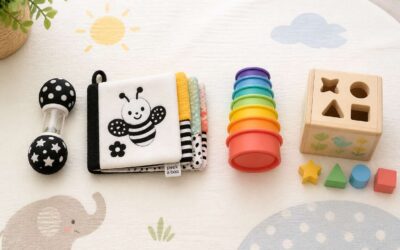
High contrast books and pattern cards are not mere decorations. They are precision tools for early sensory engagement. As baby toys for 3 months, these items rely on stark black and white imagery with pops of primary red. The bold geometry draws a newborn’s gaze naturally.
Auditory elements arrive through crinkle paper or gentle bells. Some pattern cards feature fabric textures that rustle when touched. For a three month old, the combined input creates a robust sensory experience. Common features include:
- Folding cloth books with stitched shapes
- Laminated cards with mirrored panels
- Soft vinyl options for teething exploration
Each item invites repeated handling! The visual patterns shift as the baby moves the card, while the sound changes with each squeeze. These baby toys for 3 months deliver pure sensory play.
Musical and Sound-Making Toys
A three month old encounters sound through touch and hearing together. Musical toys layer gentle bells, wooden clicks, and soft shakers into daily play. Baby toys for 3 months such as rain sticks and egg shakers produce sounds that change with movement speed and direction. A slow tilt brings a soft patter; a quick shake creates a bright burst.
The physical design matters as much as the acoustics. Rounded wooden handles fit small palms. Transparent panels let babies watch beads tumble while listening to the rattle. These baby toys for 3 months combine visual and auditory elements, with spinning drums or chime balls that roll and sing.
Consider these sound-making options:
- Rain sticks with visible beads and soft percussive tones
- Wrist rattles that sound with arm movement
- Squeeze toys with gentle squeakers
Each instrument offers a distinct sound, and the baby controls the timing.
Soft Rattles With Gentle Tones
A soft rattle is a quiet marvel among baby toys for 3 months. It does not demand attention. It simply offers a gentle voice when an infant moves a wrist or turns a palm. The tones are muted and reassuring. A three month old is still learning to manage noise. A gentle tone allows them to listen without startling.
Texture becomes the second layer of discovery. Knitted covers, silicone bumps, and smooth wooden rings each offer a different feel for tiny fingers. Some rattles combine crinkle fabrics with soft chimes. For South African parents, these baby toys for 3 months provide a calming alternative to louder options. They let the baby control the experience. A small shake brings a soft rustle. A slower squeeze brings silence.
Unbreakable Mirrors for Self-Discovery
At three months, a baby’s world is an unfolding confluence of light, sound, and touch. Yet one of the most profound discoveries a child makes during this period involves the face in the mirror. Unbreakable mirrors are a cornerstone among baby toys for 3 months, not for the superficial thrill of seeing a reflection, but for the quiet, persistent dialogue they create between cause and effect.
The visual experience of tracking a moving image is deeply engaging. When a baby watches their own gurgles and frowns, they witness a direct consequence of their actions. The auditory layer is often subtle, but it is present. Many of these mirrors incorporate rattle elements or crinkle textures at the edges. A turn of the head might produce a rustle; a wave of the hand might trigger a soft clatter. This pairing of sight and sound builds a cohesive sensory loop that captures attention for minutes on end.
These tools serve a critical developmental purpose without the need for complex mechanics.
- They encourage prolonged tummy time by providing a focal point at eye level.
- Shapes with rounded corners and high contrast frames support visual focus skills.
- Integrated textures offer tactile exploration alongside the visual stimulus.
For South African parents, selecting an unbreakable mirror addresses safety while satisfying curiosity. It is a durable companion that withstands drops and curious mouths. The mirror becomes a silent partner in the baby’s play, inviting them to investigate the relationship between their movements and the world around them. It is a foundational piece of equipment for sensory exploration, proving that the simplest baby toys for 3 months often foster the most significant developmental milestones. The quiet focus these mirrors encourage is a subtle counterpoint to the more vocal toys in their collection, offering a moment of introspective play that is just as vital as the loudest laugh.
Textured Fabric Balls for Tactile Play
Sensory toys for visual and auditory stimulation rarely announce their intent. Textured fabric balls carry their function in every seam. A gentle squeeze produces a rustle or a soft chime! These sounds arrive paired with visual cues, as high contrast stripes twist and shift beneath small, searching fingers. The ball becomes a study in consequence. A touch yields noise. A turn yields pattern. This interaction between hand and object creates a feedback loop that holds attention through repetition.
Among baby toys for 3 months, textured fabric balls excel at tactile play. Their surfaces vary deliberately:
- Ribbed panels stimulate the palm’s developing nerve endings.
- Crinkle sections invite squeezing and release.
- Soft loops allow uncertain grips to succeed.
Each element offers a distinct sensation. For a child learning to reach, these objects of texture and sound provide a first lesson in agency.
Light-Up Toys for Visual Tracking
A light does not simply shine. For a three month old, it becomes a moving target. Among baby toys for 3 months, light-up toys for visual tracking turn that target into a lesson. When a soft glow drifts left, a baby’s eyes follow. When it pauses, focus locks. These repetitions build the neural pathways for smooth pursuit, a skill tied to reading and hand-eye coordination.
The most effective options offer layered input:
- A slow pulsing orb that shifts between warm colors.
- A projector that casts faint stars across a darkened ceiling.
- A handheld wand with a gentle chime and a shimmering tip.
Each one presents a moving point to chase, with sound arriving as a second cue. These baby toys for 3 months require no grip and no strength. A baby simply watches, and in watching, trains the eyes to track. This is sensory play at its most direct: a light, a sound, and a child learning to follow.
Safe Materials and Design Features to Look For
BPA-Free and Non-Toxic Materials
The mouth is the primary tool for exploration at three months. Every object you offer will be tasted, gummed, and thoroughly inspected. This makes the material composition of baby toys for 3 months a non-negotiable priority. You are looking for items that can withstand constant washing and rigorous chewing without breaking down or leaching harmful substances.
Start by verifying that the product label explicitly states it is BPA free and free from phthalates, lead, and PVC. Natural rubber and organic cotton are excellent choices, as they are sustainable and inherently safe. Silicone is another strong option, but ensure it is food-grade to guarantee purity.
Beyond the material itself, the design must prevent hazards. Always check that any plastic components are rigid and securely attached. Look for toys that are too large to fit through a standard toilet paper roll, which is a common safety benchmark.
A reliable checklist for physical safety includes:
– Avoiding toys with small, detachable parts that could pose a choking risk.
– Confirming that all painted surfaces are non-toxic and peel-resistant.
– Choosing items with sealed seams to prevent mold growth inside fabric toys.
– Steer clear of toys with batteries that are accessible without a screwdriver.
The structural integrity of the toy matters just as much as its chemical makeup. A poorly constructed rattle that splits open reveals sharp edges on the very objects designed for comfort. I advise performing a quick tug test on any appendages or features. The design should favor smooth, rounded edges to protect delicate gums and soft skin, ensuring the play session ends happily and safely.
Size and Shape Guidelines for Handling
At three months, a toy’s geometry is as critical as its chemistry. The best baby toys for 3 months feature seamless construction and immovable parts. I always run my fingers over every surface before purchase. A rough edge or a hinge that wiggles is a warning sign. Any component that bends or separates will eventually end up in a mouth, so reject anything that fails a quick tug test.
Size determines safety. A toy must be too wide to enter the airway, and too long to be swallowed. Use a toilet paper roll test as your baseline. Items that fit through the opening are hazards. For shape, prioritize curves over angles and flat over protruding. A rounded teether or a soft ring gives a small hand something to grip without stressing the wrist.
- Choose solids over assemblies
- Reject toys with a single seam that splits
- Verify the weight is light enough for a weak lift
These guidelines separate safe baby toys for 3 months from those that merely look harmless.
Washable and Hygienic Options
The first admission of parenthood is this: your child will place everything into their mouth. That is not a failure of supervision. It is a fact of biology. The choice you make at the register determines what enters that system. For baby toys for 3 months, the material is the message.
I always check the label for a specific absence. If it does not explicitly state BPA-free and non-toxic, I put it back. Plastics that soften for teething often contain additives you do not want metabolized. Silicone is my preferred choice for mouthing. It does not leach, it does not degrade with saliva, and it holds up to repeated sterilization.
Washability is the daily ritual you will not escape. Every toy will hit the floor, the car seat, or the dog’s mouth. The construction must survive boiling water or a dishwasher cycle without warping. A toy that cannot be cleaned thoroughly is a breeding ground. I personally avoid fabric coverings that are not removable for washing.
Here is a practical check to run while shopping:
– Look for closed-cell materials that do not absorb moisture
– Confirm the item is dishwasher safe or boilable
– Ensure there are no fabric loops that trap milk residue
I always run the item under hot water in the store, then smell it. A chemical odor that lingers is a dealbreaker. The safest baby toys for 3 months are those that endure the sanitizer without changing their shape, texture, or scent.
Avoiding Small Parts and Loose Fillings
One in eight toy-related emergency visits in South Africa involves a child under one year. The cause is rarely the toy itself. It is the hidden design flaw that turns a harmless object into a hazard. When you assess baby toys for 3 months, you must think like an engineer and a parent simultaneously. The material matters, but the construction matters just as much. A teether that looks perfect on the shelf can fail the moment it is stressed by a determined little jaw.
The primary danger in this age bracket is not toxicity, though that remains a concern. The primary danger is the small piece that breaks free. For baby toys for 3 months, every component must be fused, not assembled. If a rattle has a glued seam, it will eventually split. If a plush animal has eyes, they will loosen. The design standard should be one solid piece or a fully sealed enclosure that cannot be pried open.
Here is what I inspect before any purchase:
– Squeeze the entire surface. Any give or flex that reveals a gap is a fail.
– Pull on every appendage with real force. If it stretches, it will tear.
– Check for seams that use adhesive. Heat bonding or ultrasonic welding is safer.
– Drop the toy on a hard floor from shoulder height. If anything rattles internally after the drop, it is a problem.
Loose fillings are a sneaky threat. Many fabric toys use polystyrene beads or polyester stuffing. For a 3 month old, this is risky. If the outer fabric tears, the contents become a choking hazard. I recommend solid foam shapes over beanbag style toys. Their interior structure is stable and cannot escape. The safest design avoids fillings altogether, relying on a single molded piece of silicone or natural rubber.
The label should list compliance with SANS 812, the South African safety standard for toys. If the packaging does not show this, put it down. The standard tests for sharp edges, small parts, and mechanical strength. Do not rely on visual inspection alone. The certification is the baseline. When you find baby toys for 3 months that pass this standard and use one piece construction, you have eliminated the preventable risks and freed yourself to focus on watching your child explore.
Choking Hazard Prevention Standards
SANS 812 compliance is a floor, not a ceiling. For baby toys for 3 months, food-grade silicone and natural rubber survive a determined jaw. They stretch without tearing and return to shape after compression. Avoid hard plastics that fracture into shards.
Design features prevent choking better than a label. A single molded piece with no seams is the gold standard. Hollow toys with a sealed inner chamber are safer than open compartments. I inspect the rattle’s base. If a sound chamber has a lip that catches a fingernail, it fails. The opening must slide a finger without resistance.
- Press the surface with a thumb. Any give is a weak point.
- Squeeze the toy. It must not collapse below 44mm.
Choking hazard prevention standards use a test cylinder. That test misses a subtle failure. A toy can pass but still detach under torque. I twist every handle. When baby toys for 3 months survive that twist, the design holds.
Toys That Make Tummy Time More Enjoyable
Tummy Time Mats With Interactive Elements
Tummy time is a necessary ritual, but that doesn’t mean it has to feel like a chore for your little one. Many parents face the floor with a sense of dread, watching their infant squirm and fuss within minutes. The secret lies in giving them a reason to lift their head. A static blanket simply will not cut it. You need a stage, not just a surface.
An interactive mat turns this daily exercise into a primary attraction. These mats often feature crinkly textures, detachable toys, and strategically placed mirrors that catch a baby’s eye. The goal is to entice them to push up and look around, building those crucial neck and shoulder muscles without them noticing the effort. Consider these features that keep a 3 month old engaged:
These elements are part of the wider selection of baby toys for 3 months that encourage physical development. The best part is the shift in perspective. When the mat offers a reason to stay put, you get longer play sessions. You also get a break from the frantic bouncing that usually occupies your arms. Remember that prevention is key; always check the mat for secure stitching. A well-chosen mat supports the growing curiosity of your infant.
Prop-Up Mirrors for Head Lifting
Prop up a mirror and watch your baby’s neck muscles work! At three months, lifting the head is a genuine effort. A reflection gives them a reason to try.
The angled face of a prop-up mirror lets your baby see themselves without strain. They push up, hold the position, and stare. That short burst of effort builds strength for rolling over.
I have seen infants double their tummy time when a mirror is in view. These mirrors belong in any rotation of baby toys for 3 months. They turn a quiet exercise into an active conversation. Place one at the edge of the mat. Your baby will lift, look, and learn.
Soft Activity Gyms With Hanging Toys
Soft activity gyms with hanging toys drape a quiet presence over your baby’s mat. The overhead arch forms a canopy, and the dangling creatures sway in the still air. At three months, a baby’s gaze drifts upward, and these objects offer a perfect target for swatting hands.
I have watched infants lie beneath these gyms, tracing the slow rotation of a plush star with their gaze. The soft textures invite grabbing, and a gentle chime rewards every uncertain reach. The baby practices reaching and grasping, building coordination for later play.
A good activity gym for baby toys for 3 months should offer a few elements:
- Hanging toys that are easy to grasp and soft enough to mouth safely.
- A sturdy frame that keeps toys within reach but out of the way.
The gym transforms tummy time into quiet exploration, a reason to push up and study the hanging world.
Reaching and Grasping Toys to Encourage Movement
Nearly 70% of a three month old’s day is spent in quiet observation, yet the most profound physical development happens when they are horizontal, pushing against gravity. The movement from a flat, passive position to a supported push is the first negotiation with the world. Tummy time is the arena for this struggle, and the correct objects placed on the mat can turn a necessary chore into a personal expedition.
Toys that facilitate this engagement must be chosen with a specific purpose in mind, not just as colourful diversions. A toy that rests just beyond the baby’s fingertips creates a problem. The baby faces a cognitive gap between the desire for the object and the physical capability to acquire it. This distance is the catalyst for movement. It transforms simple muscle twitches into directed effort. Soft blocks that are lightweight and splay easily upon contact are ideal. They do not roll far, which prevents immediate frustration, and their hollow interior invites the hand to close around them.
Consider the physical satisfaction of closing a fist around a textured surface. For a three month old, the palms are primary sensory organs. The new baby toys for 3 months which excel here are those that offer a reward only after effort. A crinkle paper sewn into a fabric star that emits a sound only when pressure is applied teaches the baby that their action has a consequence in the physical realm. It builds a feedback loop between intention and outcome.
To build a dedicated reach-and-grasp station for tummy time, consider the following progression:
1. Start with a textured ball that stays put, anchoring the session.
2. Place a low-profile toy with a mirrored base directly in front of the baby’s left or right elbow.
3. Position a soft, weighted rattle just out of arm’s length to encourage a full extension of the arm.
4. Rotate these positions each session to work both sides of the body equally.
The strategic placement of these items creates a microcosm of problem solving. When the hand connects with the toy, it often knocks it away, requiring the baby to initiate a shift of weight to retrieve it. This pivoting motion is the precursor to rolling. The repetitive failure and success builds a tolerance for frustration, a trait that extends far beyond the play mat. The quiet persistence of a baby trying to grasp a star just out of reach is a lesson in resilience. Offering a shallow tray with low edges and a few contrasting toys inside lets the baby practice a sweeping motion, gathering objects toward themselves. This sense of agency, of bringing the outer world into their own space, is the foundational joy of play. The motor skill is secondary to the profound satisfaction of making the world come to them.
Sensory Pillows and Rolled Props
Sensory pillows and rolled props change the geometry of tummy time. A firm, low bolster under the chest lifts the baby’s gaze from the mat to the room. This shift converts resistance into curiosity. The best baby toys for 3 months in this category offer a stable base without forcing an unnatural arch.
Texture matters. A quilted cover with varied fabrics invites the hands to explore while the body works to stay upright. Some pillows carry a gentle rattle that responds to shifting weight. The reward comes from the baby’s own movement.
Try this progression:
- Begin with a rolled muslin cloth under the armpits.
- Add a firm sensory pillow with a soft, non slip base.
- Place a small toy to the side to encourage weight shifting.
These props support the baby’s own effort. The joy of tummy time comes from control. Quality baby toys for 3 months respect this stage. They provide comfort without removing the challenge that makes the experience worthwhile.
Interactive and Soothing Toys for Bonding and Sleep
Crib Mobiles With High-Contrast Shapes
Rural evenings often carry a specific kind of quiet, a moment when the day’s noise settles into something softer. For a parent with a three month old, that quiet is sacred. Finding the right baby toys for 3 months goes beyond simple distraction; it becomes the fabric of your daily rhythm. During those late afternoon feeds, a soft plush doll with a gentle face can become a familiar friend. You hold it near your cheek, and your baby watches the exchange, learning the subtle dance of social interaction even as their eyes grow heavy.
The crib mobile, hung just beyond their reach, serves a dual purpose. It is not merely decoration. Its high contrast shapes, like bold black and white spirals or geometric birds, catch the unfocused gaze and hold it steady. This visual anchor helps quiet a busy mind. For bonding, try this simple sequence:
– Place your baby on their back after a feed.
– Slowly move a contrasting toy across their field of vision.
– Narrate the movement in a low, calm voice.
– Follow their gaze and mimic their expressions.
This quiet interplay builds a bridge between wakefulness and sleep. A well chosen mobile with slow moving parts provides the right amount of visual stimulation without overexciting a young nervous system. As the shapes turn, they project shifting patterns across the ceiling, creating a soothing environment. These moments of shared stillness, with the soft whir of the mobile overhead, often become the most cherished memories of the early months. The right toys simply make space for that connection to grow.
Teething Rings and Coolable Chew Toys
Among the baby toys for 3 months, interactive soothing toys serve a dual role in bonding and sleep. A soft plush doll with a weighted base, held near your face during a feed, captures your baby’s gaze. The subtle movement of your breath translates into the toy, offering calm focus. This visual engagement fosters a sense of safety. For nighttime, a toy with an internal crinkle provides auditory comfort without overstimulation.
- Coolable teething rings with textured nodules
- Gel filled chew toys that stay soft when chilled
- Silicone teethers with multiple grip zones
Teething rings and coolable chew toys address oral exploration, a common need for baby toys for 3 months. Chilled surfaces reduce gum inflammation, while grasping and guiding the toy develops motor skills. In South Africa’s heat, a cooled chew toy becomes a practical aid. The material must remain safe and pliable, which is why BPA free silicone dominates.
Soft Dolls and Plush Comfort Objects
Among baby toys for 3 months, a soft doll with a weighted base serves a subtle social purpose. Held near your face during a feed, it captures your baby’s gaze while your breath lends it motion. This quiet interaction builds a sense of safety without demanding performance.
For sleep, a plush comfort object with an internal crinkle provides an auditory anchor. The sound responds to your baby’s own movements, which encourages self soothing. In South Africa’s warm climate, choose breathable fabrics like organic cotton. Some parents rotate two identical toys to manage laundry days. Observe which texture your baby nuzzles, that preference often reveals a favourite.
Parent-Interactive Hand Puppets
Your hand already performs a dozen daily roles. A hand puppet adds one more, and it may be the loudest. For a 3 month old, the puppet’s face matters less than its rhythm. Move it slowly while you voice a silly character. Your baby watches the puppet, not your mouth, helping them separate sounds from sources. This creates a shared focus and a giggle trigger.
For sleep, a quiet puppet routine anchors the wind-down. Use the same puppet only at bedtime. Its slow waves and your lowered narration become a cue that sleep is near.
- Slow bobbing from side to side
- Up and down dipping motions
- A gentle peek-a-boo behind your back
These movements pair well with a crinkle toy. When you search for baby toys for 3 months in South Africa, look for puppets with internal bells or a washable face. Many baby toys for 3 months rely on sound or light; this one relies on you. The bond builds quickly; the puppet gives it somewhere to go.
Gentle Light Projectors With Calming Tunes
A gentle light projector with calming tunes creates a moving pattern on the ceiling. For a 3 month old, this becomes a bedtime ritual that signals rest. The baby toys for 3 months that support sleep are often the simplest. A projector with a soft melody repeats the same sequence, and your baby begins to associate that light with comfort. Choose settings that stay constant. Use the same projection and tune each night. Then the familiar pattern helps your baby settle.
Look for these features:
- Adjustable brightness for young eyes
- A gradual fade timer
- Volume control for the music
- A slow, steady rotation
In South Africa, rechargeable models work well for nightly use. The best baby toys for 3 months in this category are those you can set and forget. The projector runs, while you hold your baby close.
Cuddle-Friendly Musical Plush Toys
There is a special place in the 3 month old’s world for a soft, musical companion. Cuddle-friendly musical plush toys offer comfort during those fussy evening hours. When you hold the toy close, your baby feels the gentle vibration of the lullaby. This is a shared experience. The melody works because your presence is part of it. For baby toys for 3 months, the plush option must be simple to operate. You do not want to fumble with buttons while holding a sleepy infant.
The right toy also respects your sanity. A volume control that drops to a whisper is essential. A timer that shuts off after fifteen minutes prevents a night time repeat. And since South African homes often see load shedding, a toy that recharges via USB is a practical choice. Look for these traits:
- A smooth, short-pile fabric that does not trap drool
- A removable, washable inner core
- A music box that produces a clear, soft tone
These details matter. They transform a simple stuffed animal into a dependable bedtime tool. Your baby will not remember the brand. They will remember the feeling of being held, and that is the point.

0 Comments