Understanding Developmental Stages for Toy Selection
Newborn to 3 Months: High-Contrast and Soft Stimulation
In their first three months, babies perceive only strong contrasts and simple shapes. This is why black and white patterns capture their gaze more than pastel teddies. When parents ask what are the best baby toys, I always point to this sensory reality first.
Soft stimulation matters equally. Gentle rattles, crinkly fabric, and plush animals with varied textures invite tiny hands to explore. A newborn’s hearing also sharpens, so quiet chimes or soft lullabies comfort without overloading.
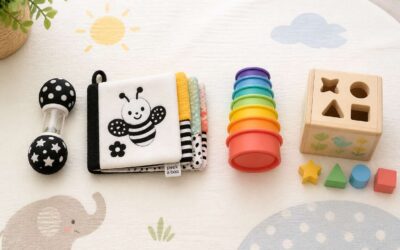
- High-contrast cards with bold geometric designs
- Unbreakable mirrors for face recognition
- Washable fabric books with black, white, and red images
These choices align with neural development. At this stage, toys should not entertain; they should gently introduce the physical world. So when you consider what are the best baby toys, prioritise contrast and softness above all.
4 to 6 Months: Grasping, Mouthing, and Cause-Effect
While parents often wonder what are the best baby toys for this age, the answer shifts dramatically when a child discovers their hands. Between four and six months, a baby’s primary goal is to make sense of objects through physical action. The world becomes a laboratory for testing how things move, fit, and respond.
This stage is defined by the relentless pursuit of cause and effect. A toy that shakes, squeaks, or rolls after being batted provides immediate feedback. That feedback loop is not mere amusement; it is the groundwork for understanding agency and control. Babies are also entering the oral exploration phase, where the mouth serves as a precise sensory tool. Any toy selected must therefore be robust, washable, and free of small parts.
– Textured teethers with varied ridges for gum relief
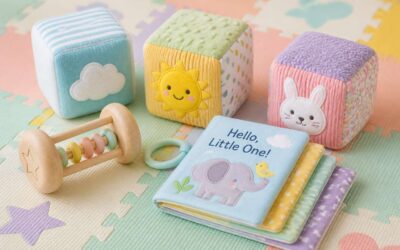
– Soft blocks that are easy to grasp and squeeze
– Activity cubes with buttons, spinners, and mirrors
These items encourage the transition from reflexive to intentional play. The simple act of dropping a toy from a highchair, though repetitive for the parent, is a profound learning experience for the child. They are testing the boundaries of gravity and object permanence.
Understanding the physical milestones here helps answer the question of what are the best baby toys. You want items that reward effort without requiring complex manipulation. A rattle that is easy to shake and produces a satisfying sound wins over a toy that demands precision. The focus is on the sensory payback that encourages repeated practice of these emerging motor skills.
Social interaction also becomes a feature of play at this age. A mirror becomes a fascinating discovery tool, as the baby may not yet recognise their own reflection but will respond to the expressions within it. This early visual feedback matters more than flashy electronic features. The best choices during this phase are simple, tactile, and responsive to a baby’s first attempts at interaction with their environment.
7 to 9 Months: Sitting Up, Reaching, and Object Permanence
The psychological shift at seven months is profound. A child begins to understand that objects continue to exist even when out of sight. This realization, called object permanence, transforms play from simple reaction into deliberate investigation. The question of what are the best baby toys now centres on items that hide, reveal, and reappear.
Sitting up unassisted grants a new vertical perspective. Reaching becomes a targeted skill. Toys must now survive being dropped, thrown, or deliberately hidden during play.
– Stacking cups that nest inside one another
– Simple pop-up toys with levers or buttons
– Soft balls with a gentle rattle inside
I have watched infants methodically drop a spoon from a highchair, not from clumsiness, but to verify its return. Each drop is an experiment. The parent’s retrieval is part of the toy’s function. This repetitive loop is essential for cognitive development.
The best choices encourage exploration without demanding fine motor precision. A toy that disappears under a blanket and reappears teaches a lesson more valuable than any electronic feature. When parents ask what are the best baby toys for this period, the answer lies in objects that reward the emerging understanding of permanence.
10 to 12 Months: Cruising, Stacking, and First Problem-Solving
The tenth month ushers in a new kind of curiosity, one that is physical and tactical. As a child pulls themselves upright and begins to cruise along furniture, their world expands once more. The floor is no longer the limit. Their hands are now free to carry objects, and the question of what are the best baby toys shifts towards items that encourage standing play and manipulative skill.
Stacking rings and chunky blocks take on a heroic role. The act of fitting one piece onto another is a first foray into problem solving. A child will try, fail, and try again with a focus that is almost meditative. For parents in South Africa, the answer to what are the best baby toys often lies in the simple satisfaction of a well-made wooden block tower, waiting to be knocked down and rebuilt.
– Push-along walkers that provide stability without being flimsy.
– Large, interlocking blocks that are easy for small hands to grasp.
– Shape sorters with simple, distinct geometric holes.
This period is defined by the iterative loop of placing, dropping, and re-placing. A child learns that a square does not fit into a round hole, but a circle does. Each successful placement is a small triumph. The toys that dominate this stage do not instruct. They wait. They offer a silent challenge that a child must meet with their own evolving logic.
The best choices reward effort and tolerate imperfection. When caregivers ask what are the best baby toys for a mobile, upright child, the focus is on objects that support the development of balance and hand-eye coordination. It is a delicate dance between physical daring and cognitive reasoning, and the right tools make all the difference.
Core Toy Categories That Boost Key Skills
Sensory Play Toys: Textures, Lights, and Sounds
A baby’s first encounter with texture reveals something about the world. Some surfaces yield, others resist. I watch my own child press a ridged silicone ball against her cheek. The question of what are the best baby toys becomes less about entertainment and more about providing honest sensory data.
- Contrasting fabrics that differ in weight and weave
- Gentle chimes that reward a deliberate shake
- Light that responds to touch without overwhelming
Lights should not overpower. Sounds should not deceive. A toy that buzzes and flashes without variation teaches nothing about consequence. These qualities are the raw materials of perception.
Motor Development Toys: Rolling, Pushing, and Pulling
A child learns to move by moving. Motor development toys turn this impulse into deliberate action. A wooden push cart gives a toddler something to lean against while finding balance. A soft ball that rolls just out of reach invites a crawl or a step. These toys answer what are the best baby toys because they respond to effort with visible movement.
- Push carts with sturdy handles and weighted bases
- Textured balls that roll slowly enough to follow
- Pull-along toys with short cords and smooth wheels
Pull toys offer a different lesson. When a child tugs a string, the object follows. The connection between effort and result is direct, and it builds understanding without words.
Cognitive & Problem-Solving Toys: Shape Sorters and Puzzles
Shape sorters and puzzles ask a different question. They demand that a child study, compare, and decide. The round block will not fit the square hole. The child learns this through trial, error, and persistence.
A well-made shape sorter presents a clear challenge. The pieces are chunky enough for small hands, the holes distinct enough to read at a glance. A wooden puzzle board with three or four knobbed pieces invites the same matching and placing.
When parents ask what are the best baby toys, the answer often lies in these guided problems. They hold attention without demanding it. They reward patience with the small click of a piece settling into place.
Good examples include:
Shape sorters with geometric blocks
Peg puzzles with large knobs
Nesting cups that double as stacking toys
Inset puzzles with familiar animals
Social & Emotional Toys: Mirrors and Plush Companions
A baby’s first smile at their own reflection is a developmental milestone. That moment, often dismissed as a cute quirk, marks the beginning of self-recognition. For infants, seeing a face mimic their movements builds social awareness through what psychologists call affective attunement.
Plush companions serve a different role. They absorb tears, endure chewing, and provide comfort. When a parent leaves the room, a soft toy offers continuity. This object attachment is a normal part of emotional growth.
When we are asked what are the best baby toys, mirrors and plush friends deserve attention. They teach a child about faces, feelings, and comfort.
Good options include:
- Unbreakable acrylic mirrors with rounded corners
- Soft dolls with simple, embroidered faces
- Small plush animals with no small parts
- Washable comfort blankets with a plush head
Language & Early Literacy Toys: Books and Talking Devices
Words are the foundation of connection. In the first year, a baby distinguishes sounds and patterns through daily exposure. Board books with simple, repetitive phrases invite a parent to slow down and speak clearly. The baby watches the face, tracks the tone, and begins to link meaning with sound.
Talking devices serve a different purpose. A button that says “dog” when pressed gives a child control over sound. This reinforces vocabulary without a screen. What a powerful thing to witness! When a parent asks what are the best baby toys, the answer must include these language tools. They are simple, durable, and they turn everyday moments into an exchange between child and world.
Safety and Material Priorities for Baby Gear
Non-Toxic and BPA-Free Materials
When parents ask what are the best baby toys, they rarely consider the chemistry degree required to decode the label. A toy can sing, spin, and recite the periodic table, but if it leaches phthalates into your child’s mouth, the entertainment value drops sharply.
South African regulations have tightened, but the onus remains on the caregiver. Check for BPA-free markings, but treat them as a starting point. Look for solid wood, natural rubber, or food-grade silicone. Avoid anything with a strong chemical odour or paint that flakes off with a fingernail test.
- Hard plastics that crack easily
- Soft vinyl with a sticky texture
- Brightly coloured paints without a clear safety standard
These are signals to move on. The best materials are boring. They do not advertise themselves. They simply exist without harming anyone. When someone asks what are the best baby toys, the truthful answer is the one that survives the mouth test and leaves no residue behind.
Choking Hazard Guidelines and Age Labeling
In South Africa, the number of choking-related incidents involving children under three remains a persistent concern. When parents ask what are the best baby toys, the answer must first account for the physical risks hidden in plain sight. A toy with a small detachable wheel or a squeaker that pops out can become a hazard in seconds. Material priorities go beyond the chemical makeup. The structure matters just as much as the substance.
Before adding any item to the cart, run a simple household test. If a component can fit through a standard toilet paper roll, it is too small for a baby. This domestic engineering trick works when labels are vague. Also, consider the age labeling on the package. It is not arbitrary. The number reflects testing based on average infant motor skills and mouth sizes. A toy marked for 18 months might still be safe for a 12 month old, but only under direct supervision. The reverse, however, is never true.
Watch for these danger signs when inspecting potential purchases:
– Small magnets or button batteries that can be accessed without a screwdriver
– Cords longer than 20 centimetres that could wrap around a neck
– Hinged parts that pinch or snap shut on little fingers
Age labeling also guides your decision on what are the best baby toys for a specific stage. A 6 month old exploring with their gums needs a different item than a 10 month old who pincer-grasps and throws. Ignoring that guidance often leads to frustration, not just danger. The best toy is the one that matches the child’s current ability and upcoming curiosity. It survives the drop, the drool, and the daily wear without changing shape. That consistency is what makes a material and a design truly safe.
Easy-to-Clean, Machine-Washable Options
When parents in Johannesburg ask what are the best baby toys, the answer often rests on how well a toy survives the washing machine. A toy that cannot be scrubbed or soaked collects grime quickly. Look for silicone, food-grade plastics, and organic cotton covers that tolerate hot water and mild detergent.
Machine-washable plush toys save hours of handwashing. Wooden toys, however, require a different routine. Wipe them down with a vinegar solution and let them air dry. Avoid submerging wood, as swelling distorts the shape. For fabric attachments, check the label for a removable, washable core.
Consider these cleaning priorities when shopping:
- Sealed seams that keep stuffing intact after repeated washes
- Non-porous surfaces that do not absorb saliva or formula
- Removable covers with zippers, not Velcro traps for lint
Testing a toy’s cleanability at the store separates a weekly chore from a daily health risk. Parents who ask what are the best baby toys should expect the item to return to its original texture and firmness after every cycle.
Avoiding Sharp Edges, Loose Parts, and Long Cords
What are the best baby toys? The ones that survive a toddler’s chaos without causing harm. Sharp edges and loose parts turn a play session into a trip to the emergency room. A thorough inspection involves running a hand along every surface. Toys with eyes, wheels, or buttons can fail when twisted. Anything that shifts or comes free is a hazard.
Long cords can wrap around a neck or limb in seconds. Pull strings longer than a child’s arm span present a strangulation risk. Material matters. Wooden toys have sanded, sealed surfaces. Plastic toys have smooth, intact molds. The right choice feels solid, weighs predictably, and offers no way to trap a finger or a breath. The best options lack sharp points, detachable parts, and cords.
Popular Toy Types and What to Look For
Rattles and Teethers: Soothing Gums and Auditory Fun
There is something haunting about a rattle’s jingle, a gentle sound that draws a baby’s gaze. For parents asking what are the best baby toys, rattles and teethers offer relief and revelation. These instruments soothe aching gums and developing ears. A good teether feels cool, firm, and yielding.
When I hold a well-crafted rattle, I notice how sound travels through a small hand. The best options combine varied textures and gentle weights. Consider these traits:
- Textured surfaces that massage sore gums
- Easy to grip shapes for small fists
- Seamless, non-splintering materials
Rattles teach cause and effect through insistent noise, while teethers give a physical anchor. In South Africa, heat worsens teething, so look for chilled designs. Ultimately, the best baby toys here engage a child’s senses without shouting.
Interactive Plush Toys: Lights, Songs, and Textures
Interactive plush toys occupy a curious middle ground. They are companions, yes, but also tiny lecturers in cause and effect. When a baby pats a singing elephant, the elephant responds. That exchange teaches agency. When parents ask what are the best baby toys, these soft gadgets often surface because they hold attention without demanding anything back.
Look for plush toys with varied textures and embedded sounds that are not overwhelmingly loud. In South Africa, where power outages interrupt routines, choose battery-free options or toys with a manual squeeze mechanism. Lights can delight, but they should be gentle. A well-made interactive plush survives drool and washing. Check seams and closures. The best ones invite repeated pressing, patting, and conversation.
Stacking Rings and Building Blocks for Hand-Eye Coordination
Stacking rings and building blocks introduce a baby to gravity, a relentless force. In South African homes, load shedding forces screen-free hours, and these toys fill that darkness with purpose. A ring dropped onto a wobbling peg teaches angles. A block balanced on another teaches patience. The child’s hands learn to measure distance, weight, and balance through repeated failure and repair.
When parents ask what are the best baby toys for this stage, I look for pieces that fit small hands and survive being thrown. Consider the following:
- Rings with a stable, weighted base that does not tip at the slightest touch.
- Blocks with rounded corners and unfinished wood, so they grip without splintering.
- Sets with varied sizes and weights, allowing a child to test cause and consequence.
South African sunlight fades plastic quickly, so natural materials or UV-resistant finishes endure longer. The best sets reward stacking itself, and that repetition builds motor control that lasts well beyond the play mat.
Activity Gyms and Play Mats for Tummy Time
Activity gyms and play mats turn tummy time into a space for muscle growth. In South African homes, floors can be cool tile or sun-warmed carpet, so a padded mat gives a steady surface for lifting the head. The best setups offer contrast and a non-slip base.
When parents ask what are the best baby toys, I look for gyms with removable toys, so the mat washes easily and the pieces rotate. Overhead elements should sit close enough to bat, but not touch the face. Consider these features:
- Frames with stable clips that do not pinch
- Mats with quilted layers for hard floors
- Toys that rattle softly when hit
South African sunlight fades colours quickly, so choose fabrics with UV resistance. A foldable mat makes storage effortless. That is the answer to what are the best baby toys for tummy time: practical, safe, and engaging.
Child-Safe Musical Instruments for Rhythm Discovery
When parents ask what are the best baby toys for rhythm discovery, I recommend instruments that respond to a child’s touch. A drum rewards a firm hit with a satisfying boom. A shaker rewards a gentle wave with a soft rattle. The child learns control through sound.
Safety guides every choice. Instruments should have sealed chambers, so beads cannot escape. Edges should be rounded. Paint should be non-toxic and bonded to the wood.
Consider these:
– Egg shakers with no seams
– A lap drum with a rubber mallet
– A wristbell strap that stays secure
In South African homes, instruments must survive heat and humidity. A wooden xylophone with a clear finish keeps its tone. A plastic tambourine with a padded rim is another sturdy option.
Bath Toys That Encourage Splashing and Pouring
Bath time offers a natural setting for learning. Water moves when a child pours, splashes, or taps. When parents ask what are the best baby toys for this ritual, the answer lies in function. A simple cup with holes invites pouring. A floating duck encourages chasing. Splashing teaches cause and effect.
Look for toys that dry quickly to prevent mold. Rubber and silicone outperform plastic in humid coastal homes. Choose items with wide mouths for cleaning.
- Stacking cups that double as scoops
- A water wheel that spins with a cascade
- Squeeze animals that spray gently
Each toy should fit a small hand and hold no trapped water. That is the real test of a bath toy.
Tailoring Toy Choices to Your Baby’s Preferences
Observing Cues: What Your Baby Reaches For
Babies are picky. One day they adore a crinkly toy, the next they treat it like a suspicious object. To figure out what are the best baby toys for your little one, watch their hands. Reaching is a direct vote. If they consistently grab for a specific rattle or a soft block, that toy wins.
Notice what they ignore too. A toy that sits untouched in the corner is a clear signal. Your baby might prefer bright colours, or they might favour something that makes noise when they swat it. Observe their eyes and their grasp.
Common cues include:
- Reaching with both hands shows strong interest.
- Turning away or fussing means boredom.
- Gripping tightly and pulling indicates a winner.
Trust these signals. Their preferences are honest, even if they change daily.
Rotating Toys to Maintain Engagement and Novelty
Those reaching hands map a hidden terrain. When a child swats at a dangling star, they are not merely playing. They are telling you which object holds meaning in their world. Tailoring toy choices to your baby’s preferences means trusting that silent language, then building a collection that mirrors their private desires. No universal answer exists for what are the best baby toys, because the answer lives in your child’s own grasp.
Yet preferences fade as quickly as they appear. The rattle adored this morning could be abandoned by dusk. Rotating toys becomes essential. Keep a few options visible, store the rest out of sight. Every few days, swap the hidden ones back into rotation. The forgotten toy becomes new again, a resurrection sparked by absence! This deliberate rhythm reveals what are the best baby toys for your particular child. Novelty does not require endless purchases. It requires observation.
Balancing Open-Ended Play with Structured Learning Tools
Each child sends a signal through their play. Some days they crave the open road of a wooden block; other days they need the clear target of a shape sorter. Both matter.
Open-ended play lets a baby invent their own rules. Structured learning tools, like a cause-effect box, provide a satisfying answer to a simple question: what happens next? Your role is to watch which one engages them longer.
The answer to what are the best baby toys is not a fixed list; it is this balance, adjusted daily, between free expression and gentle guidance. I have seen a baby ignore a new puzzle yet spend twenty minutes filling a cup with pegs. That instinct is your map!

0 Comments